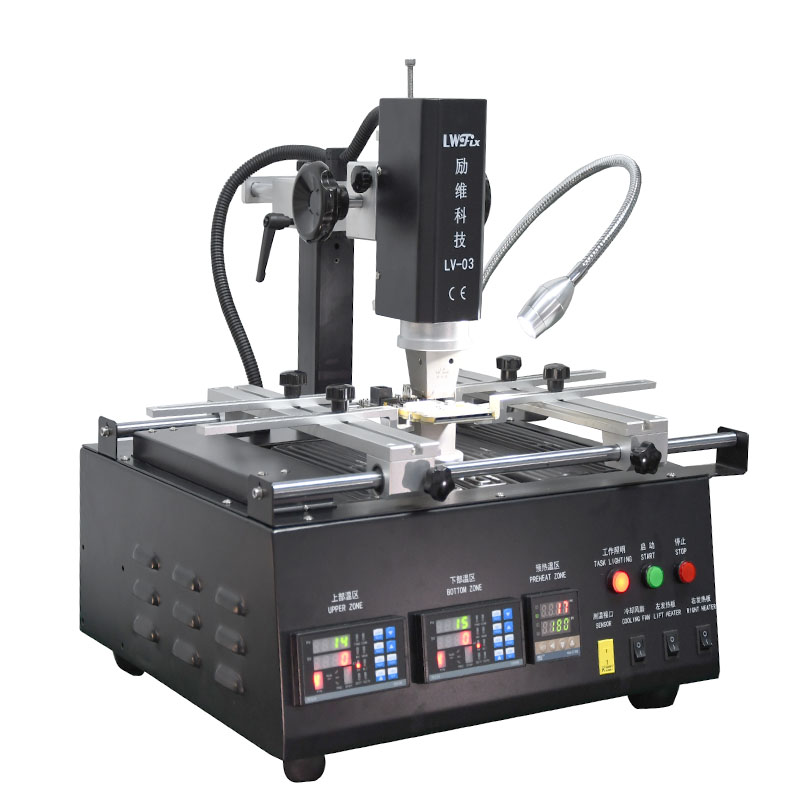
The Importance of BGA Rework Stations in Automotive Electronic Repair | High-Precision Rework for ECU, Sensors & Modules
BGA soldering defects like cold joints, voids, or misalignments often occur during SMT assembly. A BGA rework station enables efficient chip removal, reballing, and resoldering without damaging the board, reducing scrap rates and saving material costs.
Modern PCBs often use high-density designs where BGA solder joints are hidden beneath the chip. Advanced BGA rework stations with optical alignment and multi-zone heating ensure accurate placement and consistent soldering temperature, minimizing hidden defects and improving product reliability.
If a product fails post-delivery, precise BGA rework can avoid replacing the entire board. These stations feature controlled heating profiles, real-time temperature monitoring, and safe chip handling, making them ideal for warranty repairs and service centers—thus extending device lifespan and boosting customer satisfaction.
As smart manufacturing advances, standardized repair capabilities are key to operational flexibility. BGA rework stations can be integrated into MES systems, allowing traceable repair data and controlled rework processes, supporting digital transformation and quality assurance in factories.
Modern rework stations accommodate multiple chip types, including BGA, CSP, QFN, and LGA. With interchangeable nozzles and fixtures, they can handle a wide range of PCB layouts and component sizes—boosting production adaptability and versatility.
Repairing PCBs instead of replacing entire assemblies reduces material waste and electronic pollution. BGA rework technology supports eco-friendly manufacturing, helping companies meet sustainability and compliance goals.
A BGA rework station is no longer optional—it's a must-have tool in PCBA manufacturing and repair. Whether for improving production yield, enhancing quality control, or enabling efficient after-sales service, it plays a critical role in achieving high-reliability, cost-effective, and sustainable electronics production.